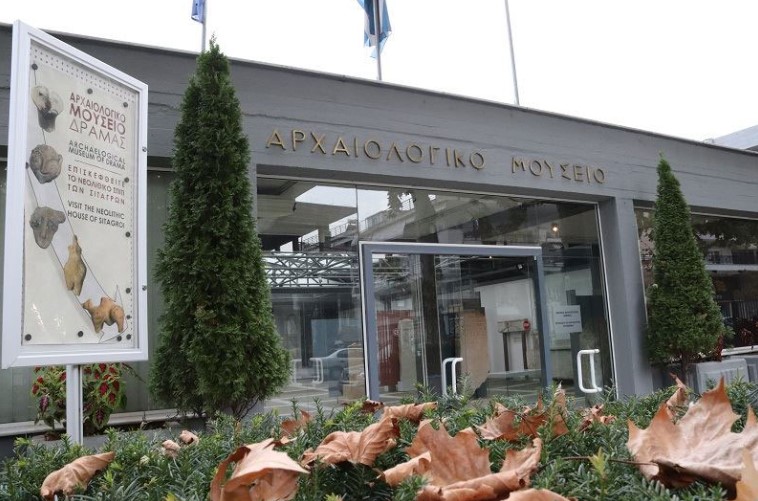
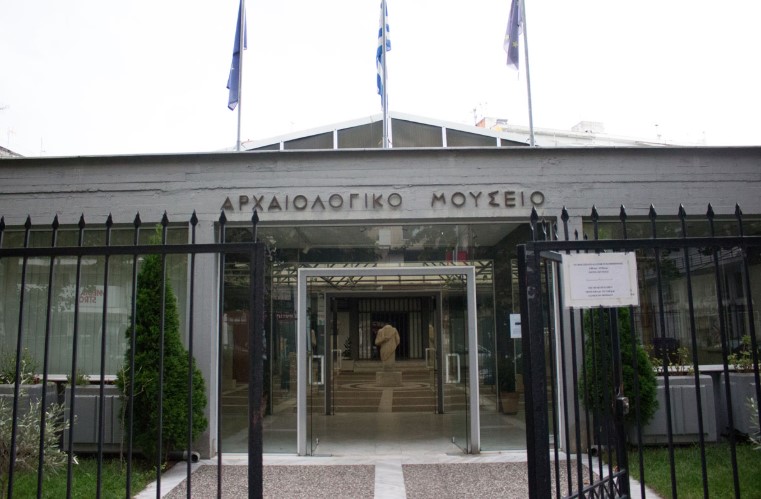
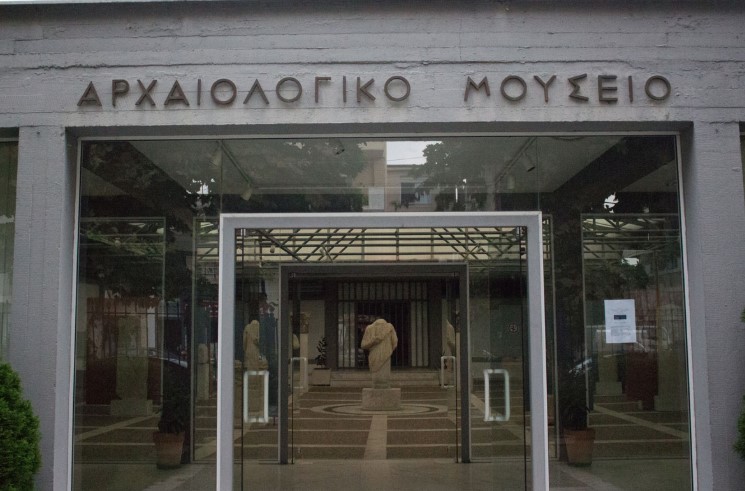
Archaeological Museum of Drama
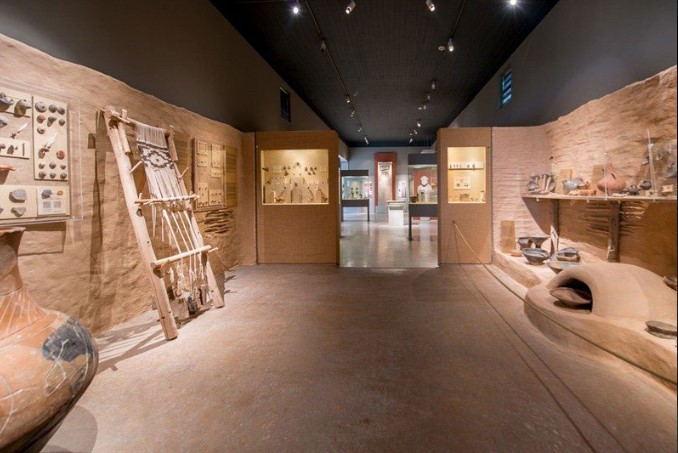
The exhibits present the history of the Regional Unit of Drama from the Paleolithic Period to 1914. The oldest finds (bones and stone tools) come from Kallifytos (the lower jaw of a proboscidean – Anancus arvernensis) and from excavations at the cave of the springs of the Aggitis River (50,000 BC). The museum also presents tools, jewellery and pottery from the prehistoric settlements of Sitagroi and Arkadikos (6000–4000 BC), from the Early Bronze Age (including many pottery vessels), the Late Bronze Age (finds from tombs in Potamoi and Exochi), and the Early Iron Age, including pottery, weapons, tools and jewellery from tombs discovered in the present-day industrial area of Drama.
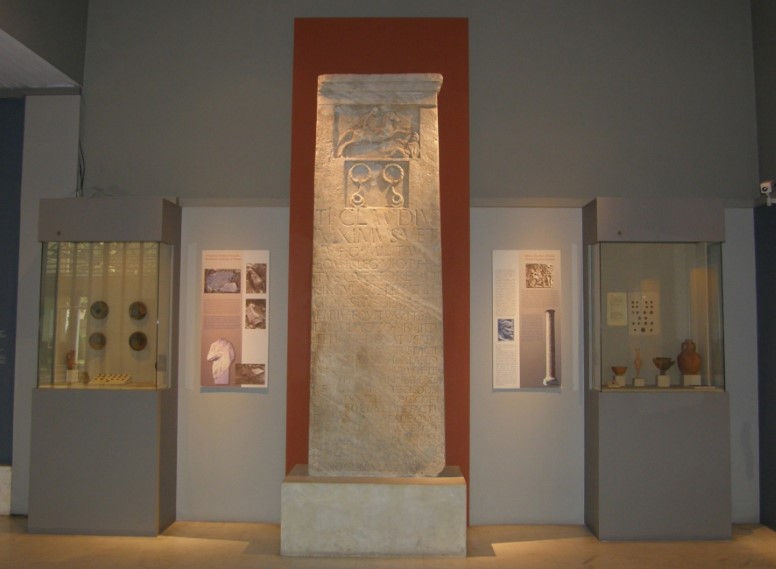
Thracians, Macedonians and Romans all left their mark on the area of Drama. Among the museum’s most important exhibits are examples of Attic pottery (6th and 5th century BC), the marble bust of the god Dionysus, which provides the earliest evidence of his worship in the wider region, a hoard of coins of King Philip II of Macedon, and other finds from the ancient settlement of Drama (4th century BC). Most of the Roman-period finds come from the city of Philippi, such as the bronze statuette of Zeus, while others come from different areas, including the funerary stele found at Grammeni, which describes the military achievements of the Roman legionary Tiberius Claudius Maximus. Evidence for the existence of the ancient Via Egnatia is provided by a milestone and a distance marker.
The Early Christian period in the region is represented by coins and ceramic jewellery from Drama, Adriani and Xiropotamos, as well as finds from the archaeological site of the wine presses at Kyria, the settlement of Drama and nearby villages. One of the most characteristic exhibits from the Byzantine period is a stone sundial with engraved hour markings (1069 AD), as well as pottery and everyday objects used by the monks of the dependency of the Holy Monastery of Eikosifoinissa at Agios Georgios Vranokastro in the Palaiochori area.
During the Early Christian period, Drama formed part of the Diocese of Philippi. In the Early Byzantine period, the region was administered by a military governor based in the fortified settlement or castle of Drama. The castle was captured by the Serbs in the mid-14th century and returned to Byzantine rule in 1371, when it became an important administrative centre and the seat of an archbishopric until its conquest by the Ottomans in 1383. Churches that have remained in continuous use since the Early Christian period include Agia Sophia and the Church of the Taxiarchs, the old Metropolitan Church of Drama. Information about the walls of Drama is revealed through inscriptions and photographic material.
Visitors continue their journey through more recent history with a photographic exhibition presenting the city of Drama, the surrounding urban centres and the mountain villages, from the beginning of the Ottoman period to the end of the 19th century.
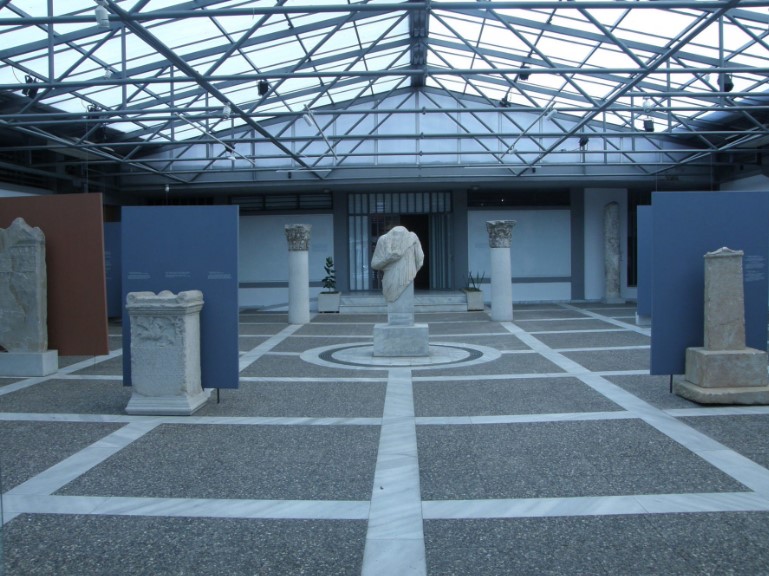
The museum also displays a collection of Ottoman coins, icons and architectural elements from the post-Byzantine churches, as well as numerous photographs of Drama and the surrounding area before the Liberation in 1913. Sculptures, votive monuments, architectural members, funerary steles, milestones and road markers illustrating the life of ancient settlements and the road network that connected the inland with the sea and the East with the West are exhibited in the naturally lit covered atrium. These objects were either donated or discovered as chance finds.
The atrium also houses the Red-Figure Krater of Prosotsani, an important vessel dating to 380–370 BC, discovered almost intact during excavations east of Prosotsani in 2014. It was found as a grave offering in a box-shaped tomb.
Information
Opening Hours: 8:00 – 17:00
Entry fee: 5 euros